World’s Smallest Open Baffle Speaker
Home / Forums / DIY Audio – DIY Speaker, DIY Subwoofer anything DIY Audio related / World’s Smallest Open Baffle Speaker
- This topic has 0 replies, 1 voice, and was last updated 2 years, 10 months ago by
 Toids_DIY_Audio.
-
AuthorPosts
-
-
 June 5, 2023 at 8:42 am #31237
Video
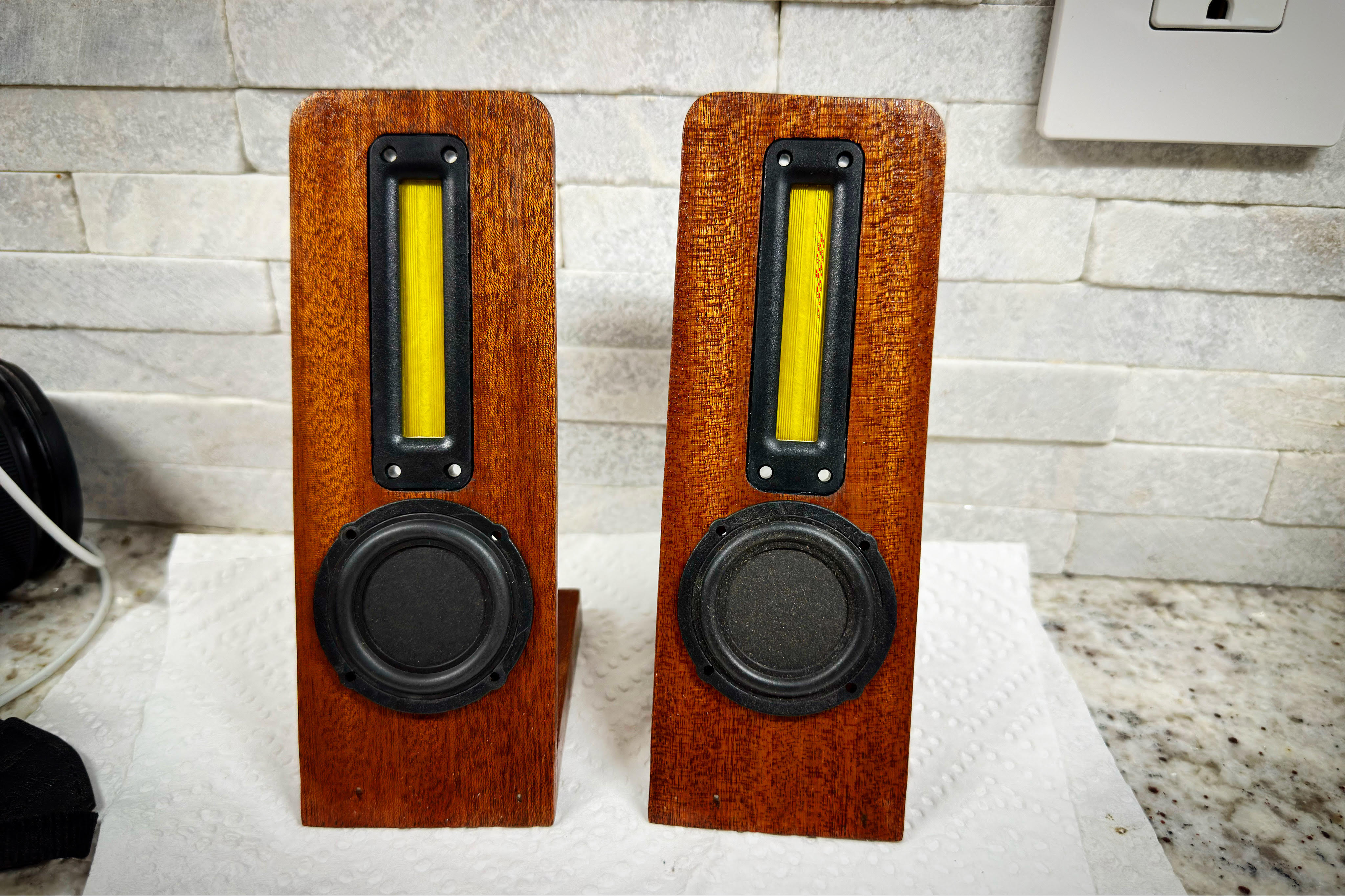
Parts Used:
2″ Driver: https://parts-express.sjv.io/qnYqej
Planar Tweeter: https://parts-express.sjv.io/9W0PGW
Speaker Dimensions:
Height:
Deep: 3.5″
Width: 2.5″
Crossover Diagram:
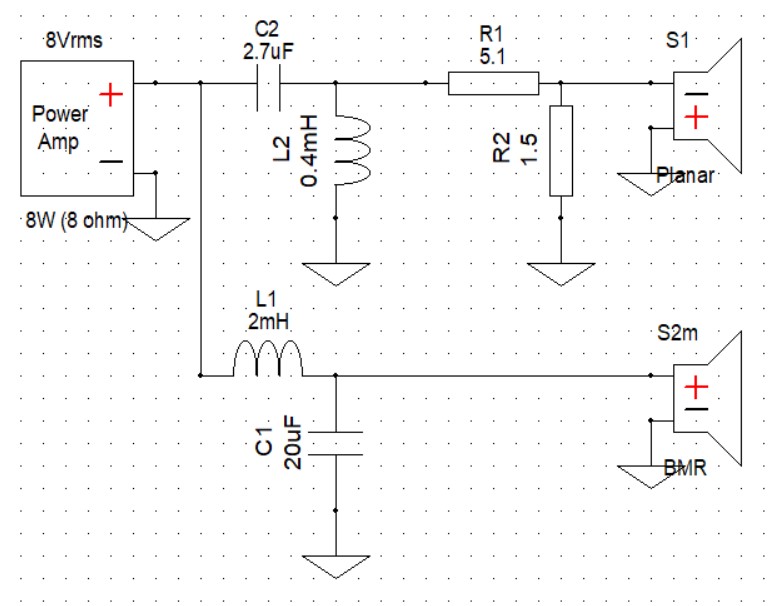
The crossover can be quite large. I might skip the poly caps and go straight to electrolytic to save space and cost. Either way, the crossover will have to be external. I would suggest putting them in a separate box. I did try 3 different series resistors on the crossover. Feel free to watch the video to see which you think you would prefer. Keep in mind the Resistors are really cheap if you want to try a few different ones.
If you want to wires to look nice, I would suggest making your own HiFi speaker wire except using crimp connector ends. I know the ends for the Planar can be hard to find, so here is a link to them as well as the larger ones you will need.
If you don’t want to go passive, you can go active. Skip to considerations for more information.
Cut List:
I used 1/4″ material for the front baffle and 1/2″ material for the base. However you can use whatever thickness of the material you want.
The speaker will be 25 degrees. That means that you will want to set you miter saw to 25 degrees and cut the base at 3.25″ long. That is from the tip to the end. You will also need to cut a 25 degree angle on the bottom of the front baffle.
Considerations:
Keep in mind these are very small open baffle speakers and as such, can’t produce bass on their own. I would personally cross these over right around 200Hz to a subwoofer like the passive radiator Voxel or something similar.
The speakers are very lightweight and can walk on their own. That may change with the density of wood chosen or the type of feet chosen. Either way you will definitely need some rubber feet to stop them from vibrating on the desk. You might even need to add some weight to the back to help keep them from walking.
If you don’t want to use a passive crossover, I would suggest using something like the Dayton KABD board that can digitally use each channel to cross it over. This will definitely save some space on your desk. Just keep in mind that you need a programmer to program it in Sigma Studios.
-
-
AuthorPosts
- You must be logged in to reply to this topic.