I want to “Get Started” Do we have a guide?
Home / Forums / DIY Audio – DIY Speaker, DIY Subwoofer anything DIY Audio related / I want to “Get Started” Do we have a guide?
- This topic has 10 replies, 5 voices, and was last updated 9 months ago by
 TVOR-Ceasar.
-
AuthorPosts
-
-
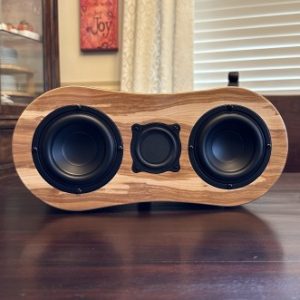
So I have built a few speakers from TOIDs and others. (Really how many speakers do you need?) But now I want to get into the design side of things. There does not seem to be a bullet point “Getting Started” guide that I can find. Creators seem to be subconsciously or directly guarding that information (industry secrets). For example, is it a complete waste of time to buy the Dayton UMM-6 and DAT V3 when there is the OmniMik $500 package and the DAT LA $500 package? Is there a better way to start out and even if you purchased those two packages is there something additional and critical ?
Maybe a Forum Bulletin board section that does not allow postings directly to it, highly regulated by the ADMIN, pinning this kind of guide would be possible. You know, to keep those pesky audiophiles out! 😁
-
 February 15, 2025 at 2:02 am #56775
From the best I can gather, both from personal experience and from conversing with others, most of us of at least a certain age started as young’uns with experimentation and then onto reading. Most of the time it was The Loudspeaker Cook Book – the version may vary depending on when it was read. We took that and other books on the subject from back in the day that could have been procured from Radio Shack, and went on. When the Wild Wild Wild Internet came around, the pages on this subject exploded on the scene like you wouldn’t believe. There’s so much out there just a quick AltaVista / Ask Jeeves / Yahoo! Search away. Yeah, I remember using all of them.
Anyway, It’s a learning curve that never ends. Just jump in and ask away. I’ll do what I can to help. In the meantime, grab a copy of The Loudspeaker Cook Book and start to wrap your head around some of the stuff you’ll need to really understand to get going.
-
Thanks for the reply, and yes that make sense. I too am from the Commodore64 days. What has peaked my interest is the recent discontinuation of the Tectonic BMR and other drivers over that few years. There are so many cool speaker designs that have become obsolete just because you cannot get the drivers they were designed around. I will grab that book.
-
-

I am in the same boat. I have built a few DIY kits with and without flat packs. While I like reading books and putting the knowledge to practice, I also love watching tutorial videos and learn from the other DIY-ers. Nick has a couple of videos where he goes in the details of a good speaker design. I also watch Kirby’s playlists on the speaker designs, driver selection etc. It is amazing to see how much information and experience is shared by the DIY community.
https://www.youtube.com/@KirbyMeetsAudio
-
February 16, 2025 at 12:55 am #56801
I keep checking in to see if Kirby will be back. Things must have changed a bit when he had a kid. Hope he comes back.
-
-

Adding my own path of experince to this as its quite different to most in the DIY audio space
I became fascinated by the 3 sciences and music technology as subjects in high school. College I studied music tech, physics and psychology then went on to do a degree in theatre and live performance technology with my dissertation subject being psychoacoustics in sound design. Now working professionally as a live sound engineer I have continued to widen my knowldge on low frequency control, electro acoustics (physics of microphones and loudspeaker drivers) and the psychoacoustic response to sound as specifc area of interest
As a result I dont have any guides or resources I would be able to share on here not because Im trying to guard any ‘industry secrets’ but due to where my combined knowldge has been aquired. I will always be very happy to answer (often in high detail) any specifc questions you may have though
-
February 24, 2025 at 6:08 pm #56937
One thing I would like to share is that learning how to code in any computer language (I’m a QuickBASIC or Visual BASIC 4 fan – QB more than VB – told you guys I’m old[er]) or use spreadsheet software like Excel. It will help make your life easier in this respect. Plugging numbers into your own calculator can give you a quick idea if something is worth pursuing or not.
For example, those who have been around long enough have heard of or seen what I want to give back to this community as my “Quick Evaluation” software where you put in a minimum of 3 and up to 5 parameters, 4 of which come directly from the datasheet or short data list, and it’ll give you results on 4 different types of boxes for that driver. Will it do final design? No. Will it help you decide if a particular driver should be considered in a particular application? You bet! And I was able to work the formulae around so that if I wanted to change a particular parameter calculated after the fact, say box size, I could gosub to a different section and have it calculate the results based on that. Math can be fun.
This comes from the multitude of programs I started writing in the 90’s when I got tired of slapping keys on a calculator and writing stuff down in my spiral notebook. As a matter of fact, I used these programs to fly through the options on the Sound Imports website when helping Tonkers on his quest.
I really need to get back and finish that up so you all can enjoy it as much as I do.
But back to my point, these things I use are based on the formulae that were put down in print. There’s no mystery in them, just application in what seems to be a logical flow. Find what works for you and dive in. The water’s just fine. 😀
-
I have often dreamed of creating a web interface of a similar nature for the DIY-ers… A system where people could provide a parts-express link of the driver or upload the data file and the system would come up with a box design.
While the tools to achieve this are available already, I feel that a comprehensive solution still eludes us as a community – a one-stop shop so to speak. The tool I have in mind could easily be extended to match drivers (low, mid, high etc), suggest an ideal box size and could even design a basic crossover.
If you ever need an individual with plenty of software systems development/web based solutions, do not hesitate to let me know. I would only be too happy to help design and develop such a system.
-
-
What I did is probably the wrong way to do it but I started with using XSim and Parts Express drivers that have the FRD and ZMA files online. I played around with that to try to learn what drivers pair well together and what each component does in a crossover. I do have a DATS 3.0 and a USB Umic. I guess it ends up being how involved you want to get and how much money you have to spend. Sadly, I tend to go with whatever the cheapest is and that ends about how you would it expect it to go. If you have the resources, get some decent equipment and see how it works for you. You can always sell your old stuff or donate it to a new (broke) audio fan when you upgrade. Good luck!
-
-
-
AuthorPosts

- You must be logged in to reply to this topic.